
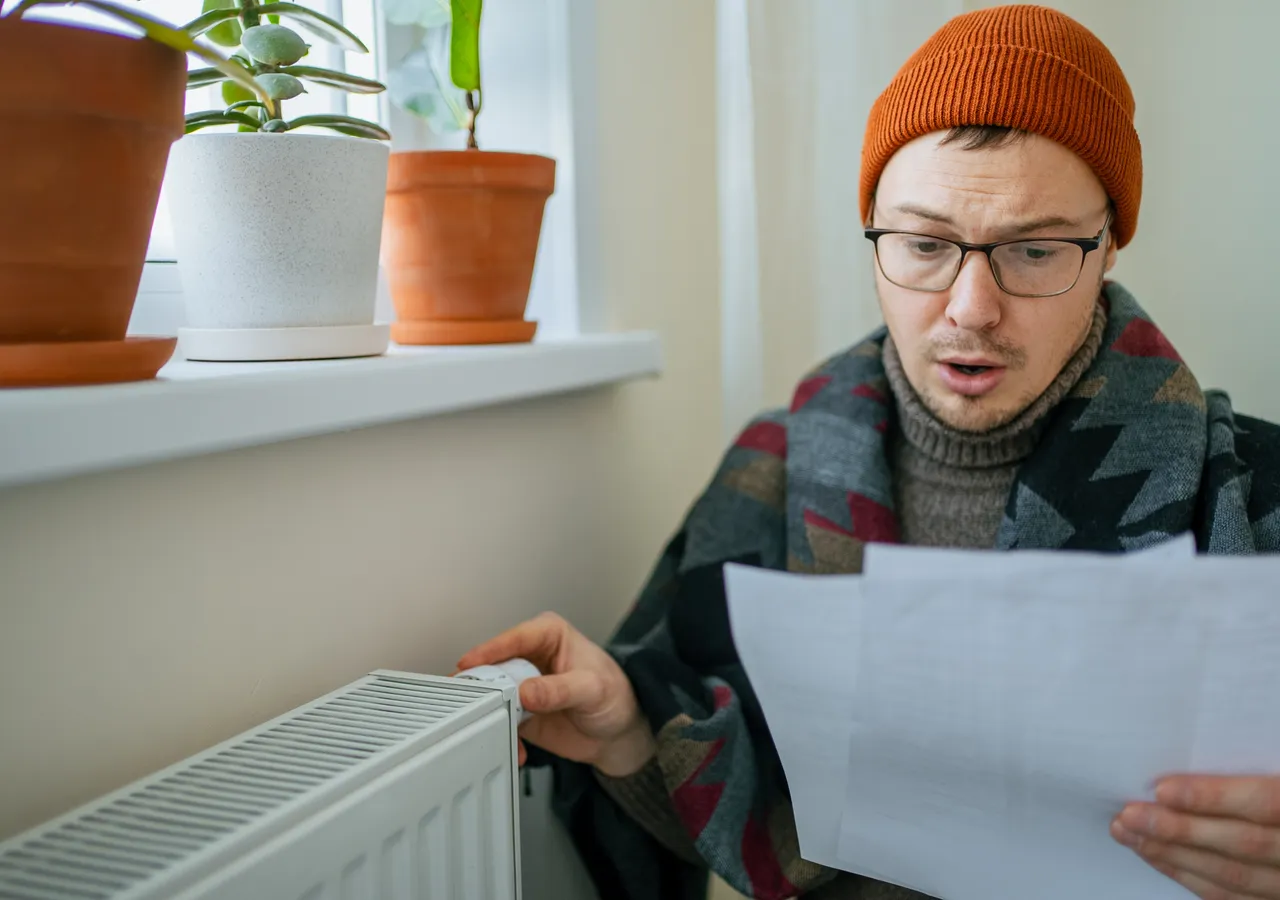
Cheap to buy, expensive to run
A plug-in electric heater is one of the cheapest appliances to buy (you can pick one up for the price of a takeaway dinner), which is exactly what makes it a trap. The purchase price hides the running cost, and for heating that running cost is where almost all the money goes.
Nearly every portable electric heater, whether it is a fan heater, an oil-filled column, a panel heater or a radiant bar heater, is a resistance heater. That means it converts electricity into heat one-for-one: a 2400W (2.4kW) heater draws 2.4 kW whenever the element is on, full stop. At 35c/kWh that is about 84 cents an hour. Run it four hours an evening across winter and a single heater quietly adds well over a hundred dollars to the season.
The uncomfortable truth is that all resistance heaters cost essentially the same to run per unit of heat. A pricey designer panel heater and a cheap fan heater of the same wattage cost the same to run. The differences are comfort and controllability, not efficiency.
Why a reverse-cycle unit beats them all
The one electric heater that breaks the one-for-one rule is a reverse-cycle air conditioner, because it is a heat pump. Instead of turning electricity into heat, it moves heat from outside to inside, delivering roughly three units of warmth for every unit of electricity it draws. That makes it around a third the running cost of a plug-in heater for the same warmth.
This is the heart of the cheap-heater trap. Spending $50 on a portable heater feels frugal, but if you already own a reverse-cycle air conditioner, using it to heat the room instead costs a fraction as much to run. Over a winter the reverse-cycle system can save more than the plug-in heater cost to buy in the first place.
Getting the most from a plug-in heater
Sometimes a portable heater is the right tool. A small heater warming one person at a desk for a short burst can be cheaper than firing up a whole-house system. The key is to heat the person and the small space, not the room, and to run it only as long as needed.
A thermostat and timer make a real difference. An oil column or panel heater with an accurate thermostat cycles off once the room is warm instead of drawing full power continuously, and a timer stops it heating an empty room. Lower wattage settings cost proportionally less to run, so use the lowest setting that keeps you comfortable.
How to cut electric heating costs
- If you own a reverse-cycle air conditioner, use it to heat instead of a plug-in heater. It costs roughly a third as much to run.
- Heat the person and the small space you are in, not the whole room or house.
- Use the heater's thermostat and lowest comfortable setting so it is not drawing full power continuously.
- Fit a timer so the heater is not warming an empty room.
- Rug up, close doors and seal draughts so the heater's output is not leaking away.
- Never leave a resistance heater running overnight to hold a temperature. The running cost stacks up fast.
Where EnergySorted fits
When you are running heaters that draw full power every minute they are on, the rate you pay per kilowatt-hour is everything. A home on a stale, overpriced plan pays a premium on every hour of winter heating. EnergySorted costs your real usage across every plan without retailer commissions, so you can see whether your rate is quietly inflating the winter bill.
If your heating load is concentrated in the evenings, the comparison can also flag whether a time-of-use plan would suit you or work against you. The Bill Health Score keeps checking that your plan stays sharp through the cold months, so the winter bill reflects the heat you used, not a rate you have outgrown.
Frequently asked questions
How much does it cost to run an electric heater per hour?
A 2400W (2.4kW) resistance heater draws 2.4 kW whenever its element is on, which is about 84 cents an hour at 35c/kWh. Lower-wattage heaters and thermostat cycling reduce that, but all resistance heaters cost essentially the same per unit of heat.
Which type of electric heater is cheapest to run?
Among plug-in heaters, none is meaningfully cheaper than another at the same wattage. Fan, panel, column and radiant heaters all convert electricity to heat one-for-one. The genuinely cheaper electric option is a reverse-cycle air conditioner, which delivers about three units of heat per unit of electricity.
What is the cheap-heater trap?
It is buying an inexpensive portable heater and overlooking that resistance heaters cost far more to run than a heat pump. The low purchase price hides a high running cost, and if you already own a reverse-cycle air conditioner, using it instead costs roughly a third as much.
Are oil column heaters cheaper to run than fan heaters?
Not per unit of heat: both are resistance heaters, so a 2kW oil column and a 2kW fan heater cost the same to run. Column heaters can feel more economical because their thermostat cycles the element off once the room is warm, but the underlying rate is identical.
Can switching energy plans lower my electric heating bill?
Yes. Resistance heaters draw full power whenever they run, so your rate per kilowatt-hour drives the cost directly. Comparing your real usage across available plans, as EnergySorted does, shows whether a cheaper rate or a better-suited tariff would cut the winter bill.
What is the cheapest way to heat a room in Australia?
For most homes it is a reverse-cycle air conditioner run on a modest setting, heating only the room in use. It delivers around three units of warmth per unit of electricity, so it beats every plug-in resistance heater on running cost. Our guide to keeping winter heating costs down covers the full pecking order.
Are infrared or "energy-efficient" electric heaters actually cheaper to run?
No. Any heater marketed as an electric heater that plugs into a normal socket is a resistance heater, so a 2kW infrared, panel or "eco" heater still draws 2kW and costs the same per unit of heat as any other. The efficiency claims are about how the warmth feels or is directed, not about using less electricity.
Do electric heaters use a lot of electricity?
Yes, they are among the heaviest household loads while running. A single 2.4kW heater uses 2.4 kWh every hour, more than a fridge uses in a couple of days. Running two or three of them across a winter evening is why heating so often drives the why is my bill so high question in the cold months.
Is gas heating cheaper than an electric heater?
A gas heater can undercut a resistance electric heater on running cost where gas rates are low, but it rarely beats a reverse-cycle heat pump once you factor in the daily gas supply charge. The honest answer varies by your rates and equipment, so it is worth costing each option on your own usage.
Should I heat the whole house or just the room I am in?
For plug-in heaters, heat only the room you are in, and ideally just the space around you. Because resistance heaters cost the same per unit of heat, the way to spend less is to heat a smaller volume for less time, close doors to unheated rooms and seal draughts so the warmth does not leak away.