
What was actually decided, and what was not
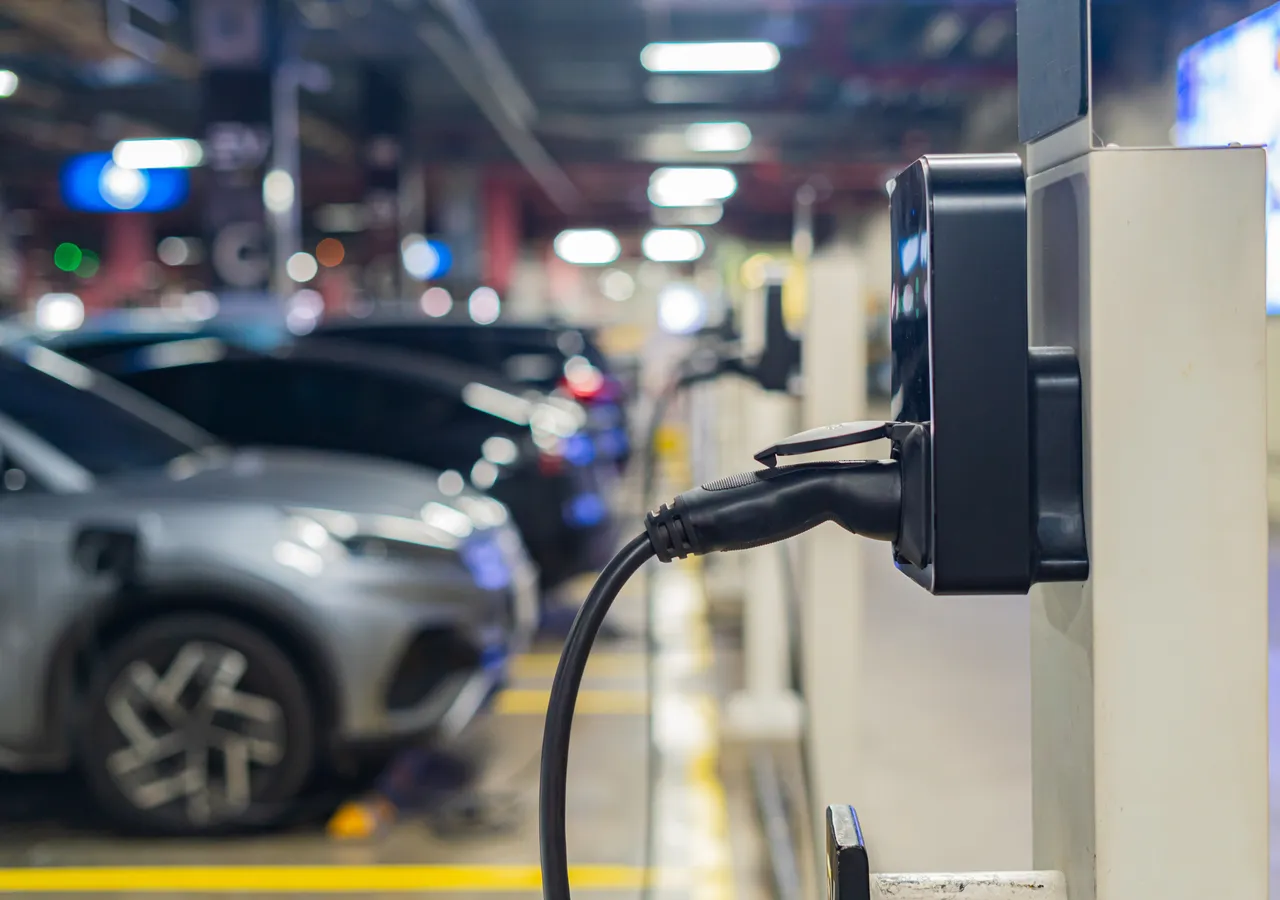
On 24 September 2026 the Australian Energy Market Commission — the body that writes the rules the electricity market runs on — published a draft determination on a rule change requested by the federal Department of Climate Change, Energy, the Environment and Water. If it is made final, it will let participating electricity distributors roll out public EV charging infrastructure and recover part of the cost through the network charges that appear on every customer’s bill.
The word doing the work there is draft. Submissions on the draft close on 5 November 2026 and a final determination is expected by 17 December 2026. Nothing has changed on anyone’s bill yet, and the rule as drafted can still move.
The scale is modest and worth stating plainly, because the headline number has been reported in ways that make it sound larger than it is. The program is built around $40 million of Commonwealth funding, targets roughly 14,000 chargers, and is scheduled to conclude on 30 June 2029.
The number that matters: about $1 a year, for five years
The AEMC’s own estimate is approximately $1.00 a year on a typical residential customer’s bill, for five years. Two details in that sentence get lost regularly and both change how you should read it.
The first is the duration. It is not a one-off dollar. It is about a dollar a year, recurring across five years, so roughly five dollars in total on a typical bill. Still small — but a recurring charge and a one-off charge are different things, and a household is entitled to be told which one it is.
The second is the split. The Commonwealth funds approximately 30 per cent of the cost of eligible infrastructure. Electricity consumers carry the balance — 70 per cent — through network charges. That is the reverse of how it is sometimes described, and it is the more important half of the arrangement: the public contribution is the minority share.
To put a dollar a year in context, network charges — the poles, wires and substations that physically deliver your electricity — already make up a substantial slice of a typical bill. If you have never separated that component from the rest, our guide to what is actually on your electricity bill walks through each line, and the free electricity bill estimator shows how the fixed daily charges compare with what you pay for the power itself.
Who gets to build them, and why that is contested
The draft rule does not simply hand the job to the networks. Charge point operators — the private companies already building public charging — get a first right of refusal on any of the identified kerbside sites. Only where an operator declines does the distributor step in, as what the AEMC calls the provider of last resort. In regional blackspots, where commercial operators have not gone, distributors are the mandated supplier.
The draft also caps the amount electricity consumers can be required to fund under the program, which is the main structural protection against a network spending freely on an asset its customers are obliged to pay for.
That has not settled the argument. Ross De Rango of Vehicle Charging Solutions Australia has argued there is no market failure in Australian charging to justify the intervention, warning that monopoly-controlled infrastructure would harm consumers and that networks might slowly take over the market while delivering poor service. Stewart Joyce of the National Electrical and Communications Association called the decision a display of staggering contempt for consumers battling a cost-of-living crisis.
Those are interested parties — both represent businesses that compete with network-owned charging — so read them as one side of a live argument rather than as findings. But the underlying question is a fair one, and it is not really about the dollar.
The question worth asking is not the dollar
A dollar a year will not change anyone’s household budget. What it establishes is a principle: that infrastructure serving one group of users can be funded through charges levied on everyone connected to the grid.
There are respectable arguments on both sides of that. Public charging in regional blackspots plausibly benefits people who will never own an EV, by making the vehicle fleet cheaper to run and the road network usable for everyone. Equally, a household that cannot afford a car at all now contributes to charging infrastructure for people who can afford a new one.
The practical thing to watch is not this rule but the next one. The useful questions are whether the allowed cost recovery stays capped at this program, whether the recovery is spread evenly nationally or falls differently on Ausgrid, Endeavour Energy and Essential Energy customers, and what happens at the 2029 conclusion date. None of those are answered by the draft, and all of them are worth more attention than the dollar.
What to actually do about it
Nothing, in the sense of this specific charge — a dollar a year is not worth a decision.
But it is a reasonable prompt to look at the part of your bill you can change. Network charges are set by the regulator and are effectively the same whoever you buy from; the retail component is not, and that is where the difference between plans lives. On a typical bill the gap between the best and worst available plan dwarfs anything in this rule change by two or three orders of magnitude.
If you want to know what that gap is for your house rather than in general, upload one recent bill and we will cost every plan available at your address on your own usage and rank them cheapest first. It is free, it takes about two minutes, and it needs no card.
Frequently asked questions
Has this already been added to my bill?
No. It is a draft determination published on 24 September 2026. Submissions close 5 November 2026 and a final determination is expected by 17 December 2026.
How much is it, exactly?
The AEMC estimates approximately $1.00 a year on a typical residential bill, for five years — so around five dollars in total, not a single dollar.
Do I pay this even if I do not own an electric vehicle?
Yes. It would be recovered through network charges, which every customer connected to a participating distribution network pays regardless of what they drive.
Who pays the rest of the cost?
The Commonwealth funds approximately 30 per cent of eligible infrastructure. Electricity consumers carry the remaining 70 per cent through network charges.
Could networks spend as much as they like and bill it to customers?
The draft rule caps the amount electricity consumers can be required to fund under the program, and gives private charge point operators first refusal on sites before a distributor can take them.
Will this cost the same on every network?
The AEMC’s estimate is for a typical residential customer. Only distributors that choose to participate through the competitive process run by the department would recover costs, so the impact is not necessarily identical everywhere.
What can I actually do to reduce my bill?
Compare. The spread between the cheapest and dearest plan for the same house is typically hundreds of dollars a year — far more than any of this. Our comparison costs every plan in your area on your real usage.