
Prices genuinely did fall, for most people
This is not spin. In its final determination for the 2026–27 Default Market Offer, released on 26 May 2026 and taking effect from 1 July, the Australian Energy Regulator set lower residential standing-offer prices in most regions. New South Wales residential flat-rate prices fell by between 3.4% and 5.0%, South East Queensland fell 7.2%, and South Australia was the exception with a modest 1.4% increase. Small businesses saw reductions across all three regions.
The AER attributed the cuts to three things: lower wholesale electricity costs, reduced environmental scheme costs, and lower retail operating costs. Alongside that, wholesale market reporting through 2026 described falling prices as renewables output grew and battery storage began smoothing evening peaks.
And yet a very large number of households opened their next bill and found it higher. That contradiction is real, and it has explanations that are worth knowing, because two of the four are things you can act on.
Cause one: the reference price is not your price
The Default Market Offer is a cap on standing offers — the default plans retailers must make available — and it is calculated for a model household, not yours. If you are on a market offer, which most people are, a DMO movement does not directly change what you pay. Your rates change when your retailer changes them, or when your plan’s benefit period ends.
So a headline saying prices fell can be simultaneously accurate and irrelevant to your bill. Our Default Market Offer explained guide covers what the reference price does and does not control.
Cause two: the rebate that vanished
The federal Energy Bill Relief Fund ended on 31 December 2025, so 2026 bills carry no automatic federal credit. A household comparing a 2026 bill against a 2025 one is comparing a bill without a credit against a bill with one. That difference can easily exceed a few per cent of rate movement, and it looks exactly like a price rise.
This is the single most common explanation for "prices fell but my bill went up", and it is not a rate change at all. Our where did the energy rebate go guide covers what replaced it and what you can still claim.
Cause three: wholesale is only part of the bill
Even a large fall in wholesale costs moves a household bill less than people expect, because wholesale energy is only one component. Network charges — the cost of poles, wires and metering, set through regulated distribution determinations rather than by your retailer — are a substantial share of a typical bill and move on their own schedule. Environmental scheme costs and retail margin make up the rest.
So a headline about wholesale prices halving does not mean bills halve. It means one input to a bill fell, while others did not necessarily move with it, and network charges in particular can rise in the same year wholesale falls.
Cause four: your benefit period quietly expired
Most competitive plans guarantee their discount or rate for a fixed window, often around twelve months. When it ends, you roll onto ongoing rates that can be materially higher, and nobody is obliged to contact you on the day it happens. If your bill jumped and the market did not, this is the first thing to check.
It is also the one with the largest and most immediate fix, because the remedy is simply re-comparing. A household that has not re-checked in two years is very likely past a benefit period and paying ongoing rates against a market that has moved.
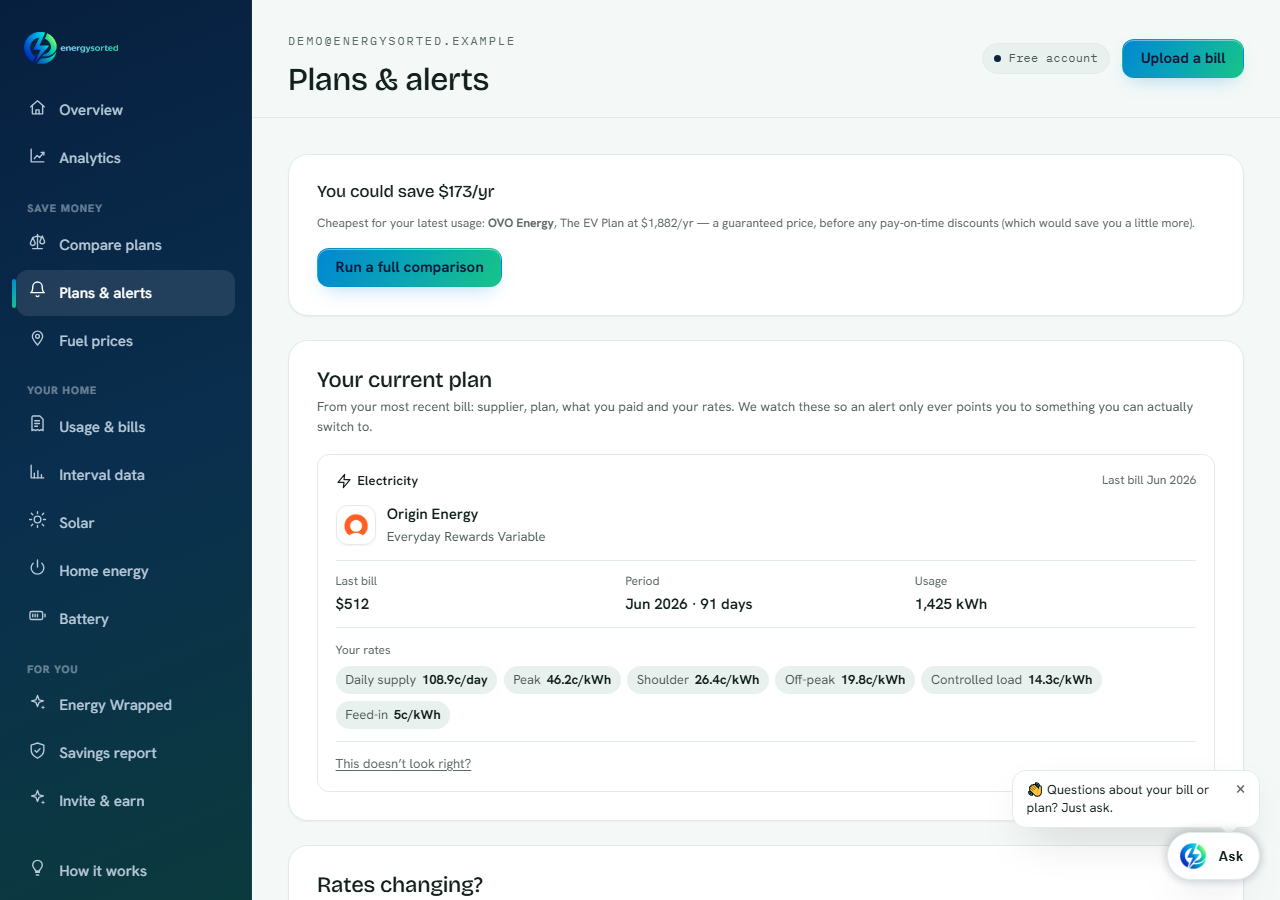
EnergySorted costs the whole market against your real usage, proves the figure against the bill you already paid, and then re-checks nightly — so an expiring benefit period surfaces as an alert rather than as an unpleasant surprise three bills later. Compare on your real bill, or start with the free electricity bill estimator.
What to do with all this
Work through it in order. Check whether the missing federal credit explains the gap. Check whether your billing period was longer or your usage genuinely higher. Check whether your benefit period has ended. Then, and only then, conclude something about market prices.
Two of those four causes are within your control, and the two that are not — the reference price and the network component — are worth understanding precisely so you stop attributing bill movements to them incorrectly.
Frequently asked questions
Did electricity prices actually go down in 2026?
For most Default Market Offer regions, yes. The AER’s final determination for 2026–27, released 26 May 2026 and effective 1 July, cut New South Wales residential flat-rate prices by 3.4% to 5.0% and South East Queensland by 7.2%. South Australia rose 1.4%. Small businesses saw reductions in all three regions.
Why did my bill go up when prices went down?
Usually one of four things: you are on a market offer so the reference price does not set your rates; the federal rebate that used to be applied to bills ended on 31 December 2025; wholesale is only one component of a bill and network charges move separately; or your plan’s benefit period expired and you rolled onto higher ongoing rates.
Does the Default Market Offer set the price I pay?
Only if you are on a standing offer. The DMO caps default plans and is calculated for a model household. Most people are on market offers, where the retailer sets the rates and a DMO movement does not directly change the bill.
If wholesale prices fall, shouldn’t my bill fall too?
Less than you would expect. Wholesale energy is one input among several — network charges set through regulated distribution determinations are a substantial share of a typical bill and can rise in the same year wholesale falls, along with environmental scheme costs and retail margin.
How do I tell which of these is affecting me?
Compare two or three bills on components rather than totals: days billed, kilowatt-hours used, the rates charged, and any credits applied. A higher bill at identical usage and identical rates is usually a missing credit. A higher bill at identical usage with higher rates is usually an expired benefit period.